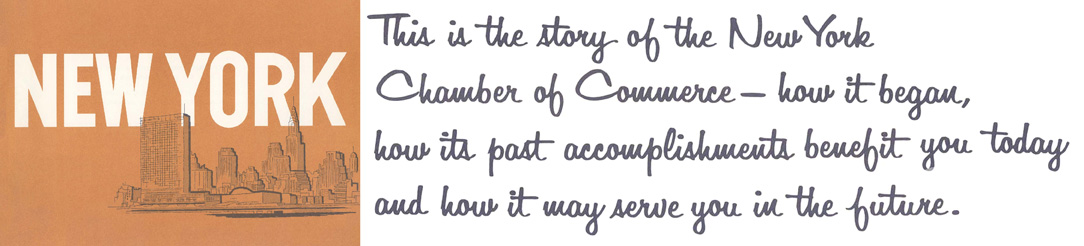
I was particularly delighted by something mentioned by one of the artists (you can catch it around the 5:00 minute mark). She said that the librarian who showed her items from NYPL's map collection remarked to her that maps are where art meet science--something that is immediately evident to anyone who has had the pleasure of viewing any old printed or hand drawn maps. I was really struck by that observation because that is precisely one of the things that prompted me to start this blog--that special collections, archival collections, rare books, etc., are not just noteworthy for their content necessarily, although that is of course a huge and valid aspect of their draw. They are also remarkable for their aesthetic qualities because many of these materials are designed/produced/printed/presented in ways that are no longer common. You can read some of my past entries to see what I mean. Librarians and archivists are always looking for ways to attract new researchers to use their institution's collections--that's why the hot topic at libraries and archives everywhere is Web 2.0 technologies. However, I think one mistake is that people in our profession sometimes seem to assume that the only people who would be interested in these materials are the standard academic researcher; there seems to me to be not much outreach to potential researchers who may fall outside of that scope--visual artists, designers, marketing professionals, activists, fashion editors, and who knows who else. I think this is a shame because we have so much to offer! I am continually amazed at the things I have found just in the NYCC collection alone. Hopefully, as technology makes it easier and faster to access unique collections, more and more communities will know about and use these materials. I mean, who knew you could find something like this in the records of a Chamber of Commerce?

Anyway, I took just over a month hiatus from this blog for two reasons: 1) Vacation. 2) Have you ever tried to resume your normal routine after a 2 ½ week vacation and it just didn't work? It didn't work for me. I came back, realized the enormity of the collection, thought about all I have accomplished so far, thought about all I still have left to do, had an anxiety attack, and then decided to take another vacation! Well, kind of. I did come back and feel a bit overwhelmed by the hugeness of this project, so I decided to put my nose to the grindstone and begin tying up all the loose ends that had been bothersome lately. Then I did take another vacation--a much shorter one and kind of last minute. I ended up in Washington, DC for the inaugural weekend, along with about a zillion other out of towners. I hadn't planned on going--I was perfectly content to watch it on Jumbotron kindly provided by Columbia University on the main campus. But I ended up tagging along to DC with someone who had to work an event. Being in DC, and being an archivist, my primary interest was in seeing either the Library of Congress or the National Archives, of course. Unfortunately, due to the timing of the trip both places were closed the entire time I was there--closed on Sunday, closed on national holidays, closed for the inauguration. I was disappointed, but I did manage to take this picture out front on Sunday night:

But that was the only disappointment in an otherwise exciting weekend, where I got to be part of a historic moment rather than just archiving pieces of historic moments.
Now, back to the collection . . . One part of the project that I have been working hard to finish up is the Publications collection.

There are just over a hundred publications total in the collection; most of these probably qualify as rare, and several are in pretty bad shape physically. They reflect a wide range of subjects--histories of the Chamber, manuals on business practices, and detailed notes on the annual banquets. Once we realized how many publications were included in this collection, I knew that something different was going to have to be done to make them accessible. A list of the titles in the finding aid seemed a bit cumbersome and not so helpful, a separate finding aid seemed silly, and creating catalog records for each one seemed labor intensive and impractical. During a visit to the Avery Library to drop off some building blueprints, I learned from their curator how they manage to make collections of blueprints accessible--they create a catalog record for the collection which includes a link to a read-only spreadsheet that itemizes each blueprint. It's sort of an unconventional way of doing things--not quite a finding aid, not just a MARC record, but I think it's a stellar idea. So that's what we decided to do with our publications--create a separate record for the Publications collection which will be linked to the record for the general collection. These publications will be going off-site with the rest of the collection but they can be recalled individually just as a manuscript box can. In the end, I think it will make more sense to the researcher, make titles easier to find, and is space efficient. So, thanks Avery!
By the way, most of the smaller publications--leaflets, pamphlets, booklets, handouts--will stay with the general collection in the Printed Materials series.

That series contains all sorts of interesting finds like guides to New York City, tributes to members, and my personal favorite, "Let's Arbitrate!," a manual on arbitration. Doesn't that sound fun?


